Seismic Refraction
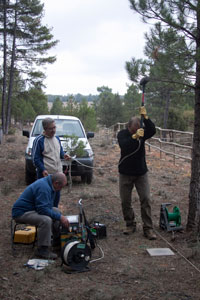
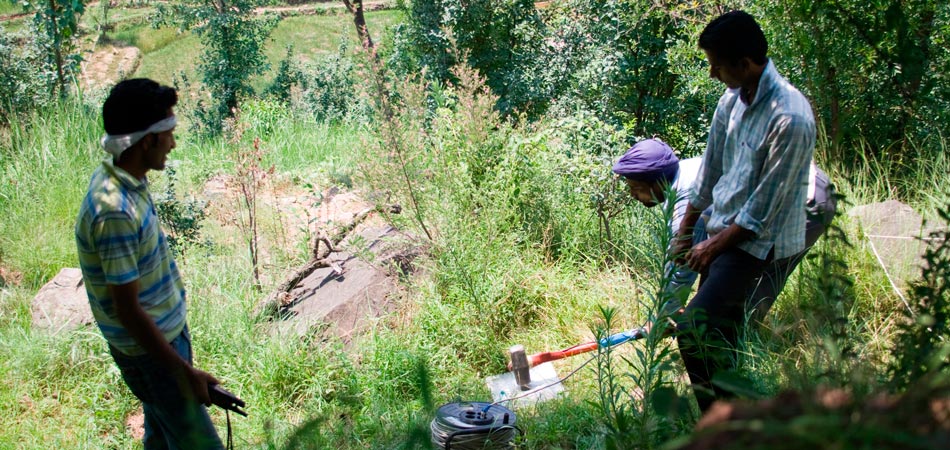
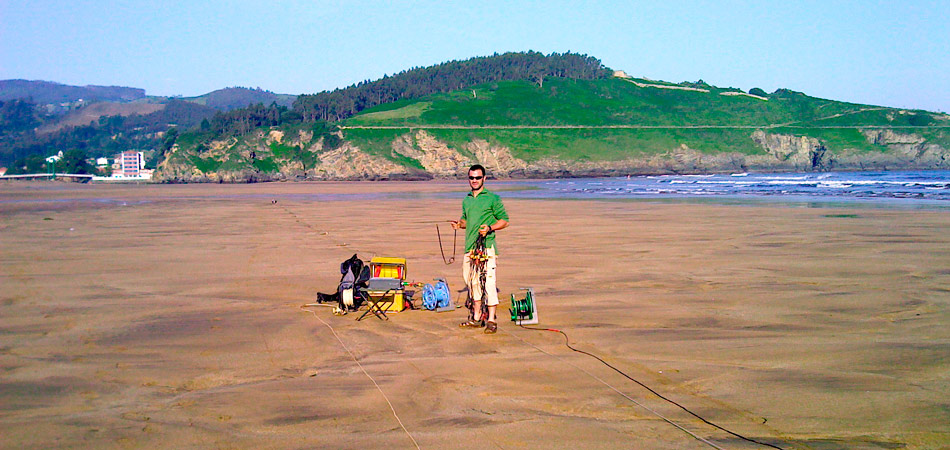
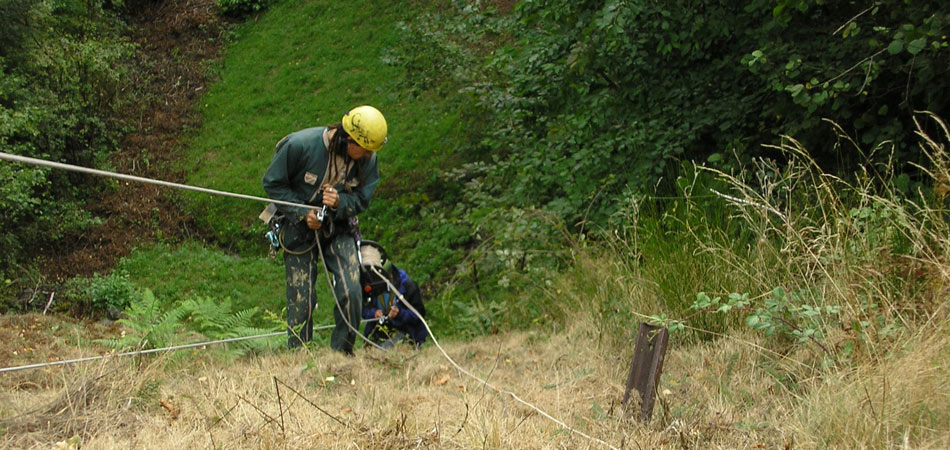
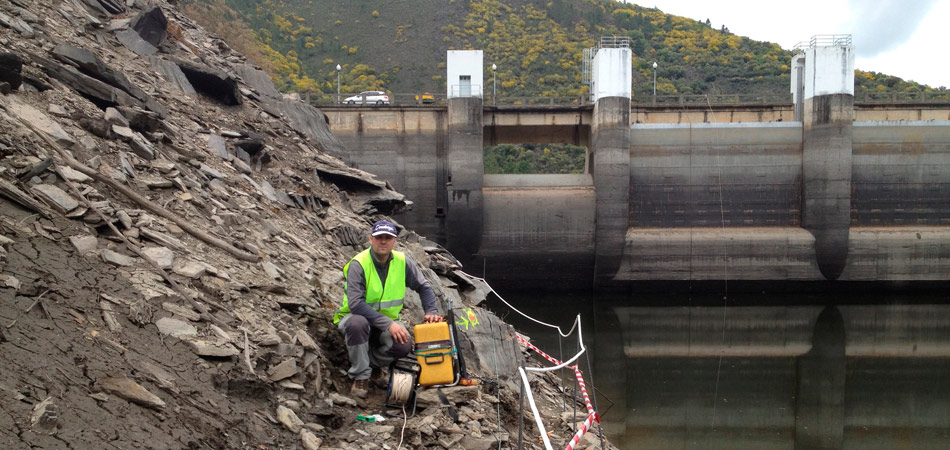
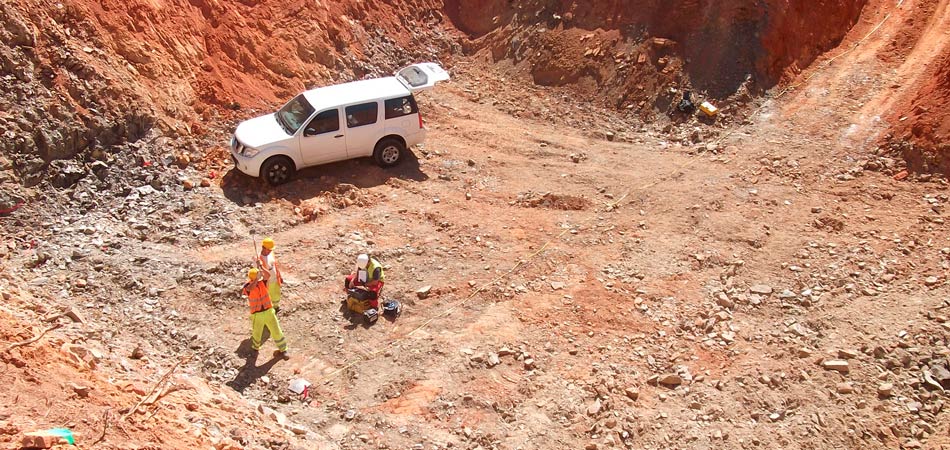
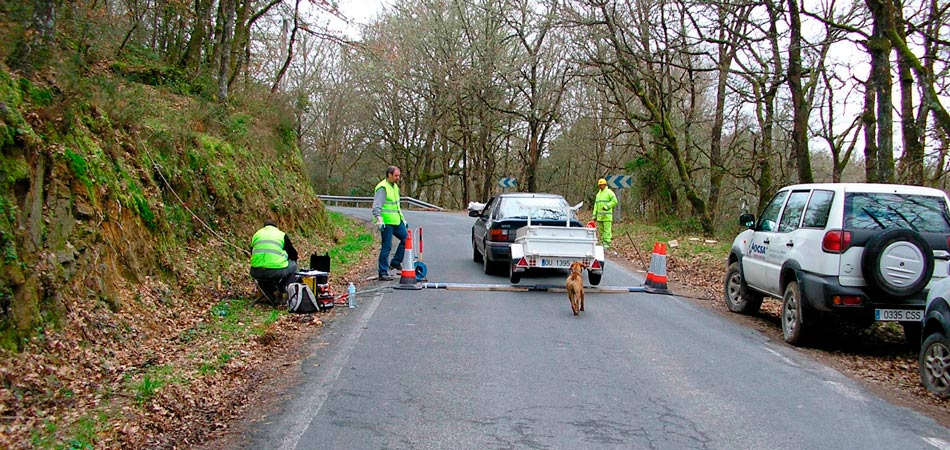
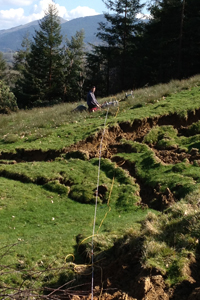
The refraction seismic is possibly the most used geophysical technique in civil engineering for the study of the most superficial layers of the subsoil. Our geophysical services allows us, through this technique, to define the alteration of the materials that make up the subsurface, to detect faults and / or fractures, areas of possible landslides, the location of fills, etc.
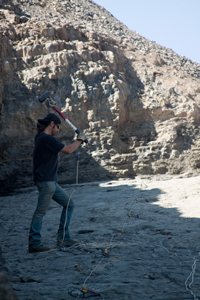
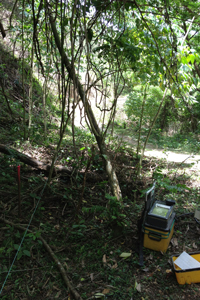
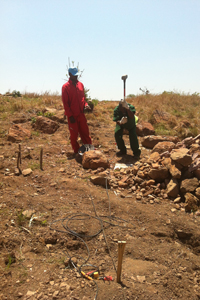
In the projects in which we work, we use the ASTM D5777 standard as a guide to execute the technique Seismic refraction. Basically this technique consists of generating a seismic wave train, using an appropriate energy source (hammer, "gun", weight drop, dynamite, etc.) and measure the time of travel of these waves, once refracted, fulfilling the Snell law, in the different layers or interfaces with sufficient acoustic impedance contrast (velocity * density), between the energy source and a series of sensors (geophones), arranged in a straight line from it (profile).
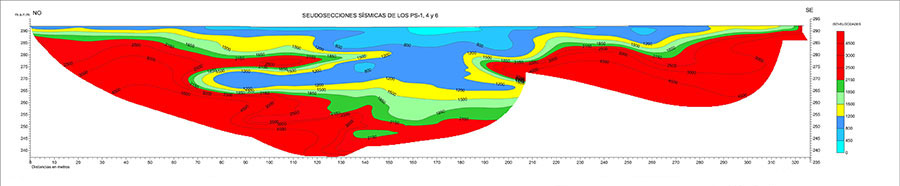
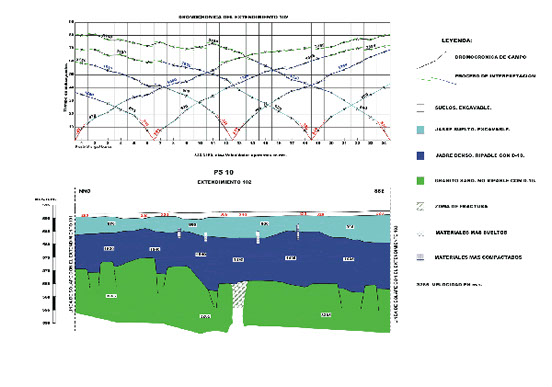
From the analysis and interpretation of the distance-time (called dromocronic or traveltime graph) graphs, the thicknesses and seismic velocities, P wave, of the different layers that compose the subsoil are obtained.
Types of interpretation of seismic refraction
Two methods of interpreting seismic refraction are currently used. In our geophysical services we have computer tools to carry out both types.
Interpretation of refraction seismic by ray theory
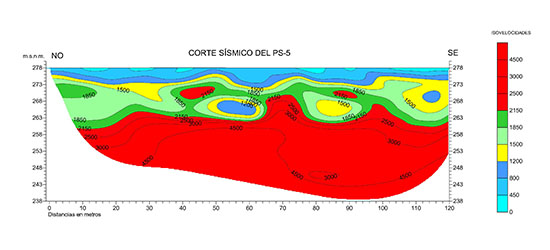
Interpretation of refraction seismic by seismic tomography
Applications of seismic refraction
Mainly the use of the geophysical technique of refraction seismic comes from geotechnical projects, civil engineering or construction. In these projects the use of this method provides information of the terrain on its ripabilidad, lithologic arrangement, as well as the detection of faults and fractures, etc. The reduction of budgets in projects in linear works (road and railways), dams, buildings, etc., are considerable when making a combined use of soundings and refraction seismic.
In mining, the use of this technique is focused on quarry studies.
In some cases it can also be used in archeology for the detection of foundations.
Examples of seismic refraction projects
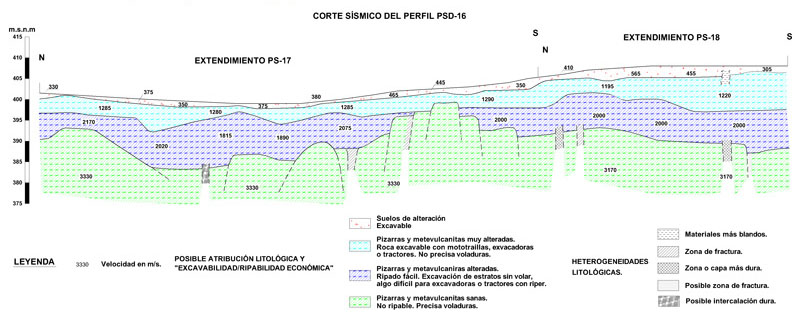
Study of ripability and lithological structure by refraction seismic for a motorway project
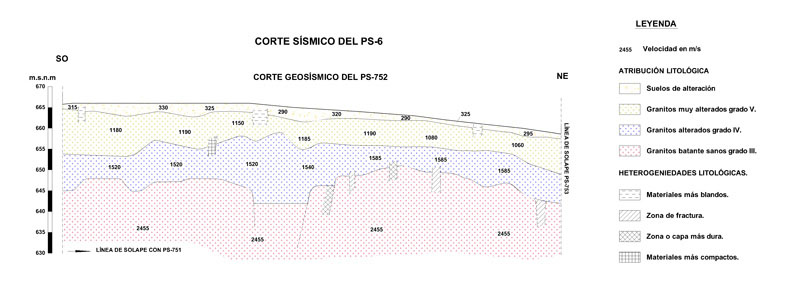
Information on the degree of alteration of granitic formations from seismic refraction data
Seismic tomography to study the slope of a reservoir